New York Construction Report staff writer
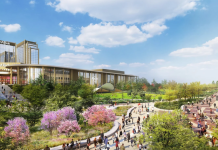
Gilbane Building, in a joint venture with DPS Advanced Technology Group, has topped out the NanoFab Reflection facility at the NY CREATES Albany NanoTech Complex, a major construction milestone in New York’s push to expand domestic semiconductor research and manufacturing.
The 310,000-square-foot research and development facility is part of a broader $1 billion investment at the Albany NanoTech Complex and supports the state’s $10 billion semiconductor strategy.
Once complete, the building will anchor North America’s first publicly owned High NA extreme ultraviolet lithography center, a key technology for next-generation chip development.
NanoFab Reflection will include 50,000 square feet of ISO5 cleanroom space across two levels, along with two additional floors and a rooftop penthouse.
The project also includes construction of a 900-space parking garage and upgrades to a high-voltage switchyard to support the energy demands of advanced semiconductor research.
The building is being constructed to achieve the highest level of LEED certification, reflecting an emphasis on sustainability, project officials said.
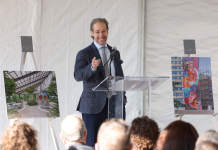
“This milestone reflects the dedication and expertise of our team and partners,” said Christian Calabrese, senior project executive at Gilbane Building. “We’re committed to delivering this design-build project with precision and excellence to support a hub for cutting-edge research and collaboration.”
Empire State Development President and CEO Hope Knight said the topping out represents continued progress toward establishing New York as a center for semiconductor production in the United States.
NY CREATES President Dave Anderson said the facility and the High NA EUV equipment it will house are already attracting global industry interest and positioning the state for long-term leadership in chip innovation.
The project is expected to create hundreds of permanent jobs and help spur billions of dollars in private investment across New York state. Construction is on schedule, with completion anticipated by the end of 2026.