New York Construction Report staff writer
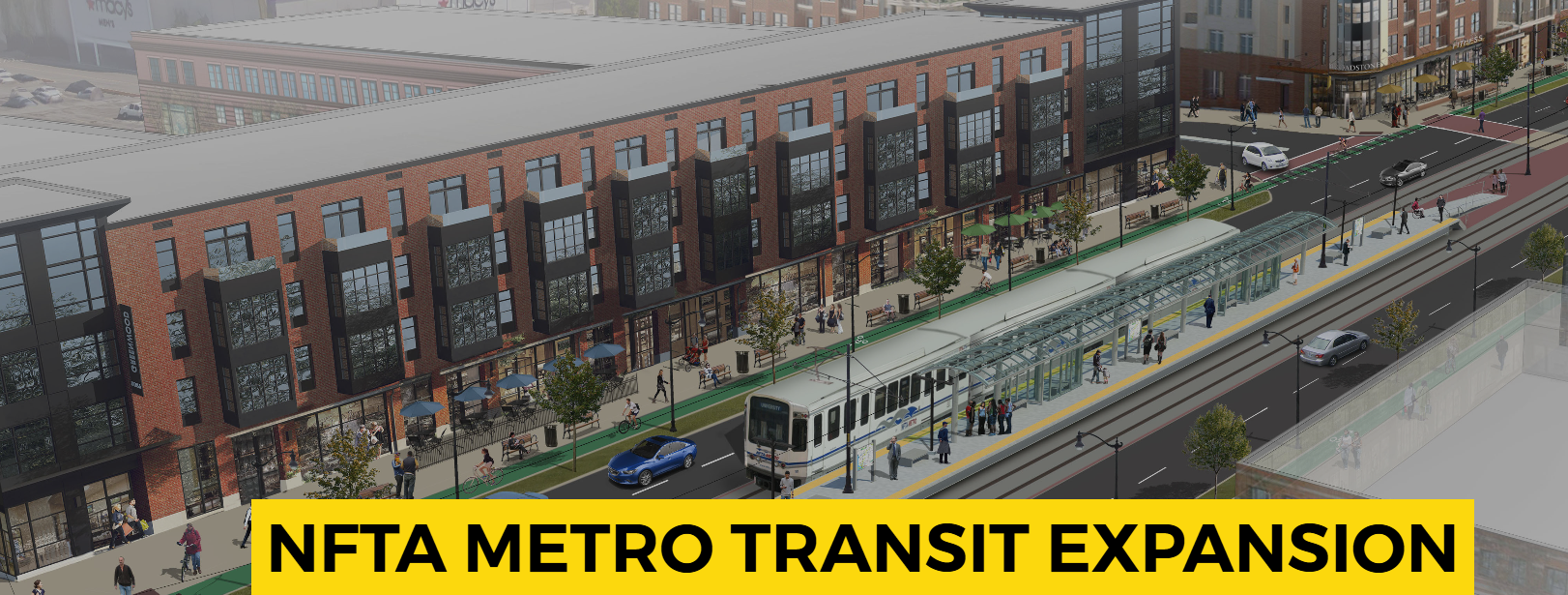
The Niagara Frontier Transportation Authority’s Metro Rail expansion is expected to generate thousands of construction jobs for Western New York as the project clears a major federal milestone. The Federal Transit Administration has completed its federal environmental review, concluding the Final Environmental Impact Statement (FEIS) process and moving the long-planned seven-mile expansion closer to reality, Congressman Tim Kennedy announced.
The project will extend high-capacity transit from NFTA-Metro Rail’s University Station through the University at Buffalo North Campus, linking all three UB campuses and providing seamless connections through the region’s largest concentration of housing, employment, healthcare, education, and entertainment hubs.
“The completion of the federal environmental review for this transformative Metro Rail expansion is a major victory for Buffalo and all of Western New York,” Kennedy said. “This project is about connecting people to jobs, students to campuses, and neighborhoods to economic opportunity, creating thousands of good-paying construction jobs in the process.”
NFTA’s existing light rail system already ranks among the top in the nation based on riders-per-mile, supporting strong demand for expanded service. As Upstate New York’s only light rail system, the project also represents an opportunity to balance transit investments across the state.
The environmental review process began in August 2021, when the Federal Transit Administration issued a Notice of Intent to prepare environmental documents under the National Environmental Policy Act. Originally expected to be completed by the end of 2024, the review’s conclusion now allows the project to advance further into detailed design and funding.
Funding for planning and early design work was secured by Kennedy during his time in the New York State Senate, including $5 million in 2016–2017, $6 million in 2019–2020, and $20 million in 2022–2023. Design work is ongoing, including engineering, mapping, and planning, and construction contracting opportunities are expected to follow.
“The project will strengthen Buffalo’s public transportation infrastructure and expand access for residents and businesses alike,” Kennedy said. “With this milestone, we are closer than ever to delivering a modern, reliable transit system that matches our region’s ambition.”