New York Construction Report staff writer
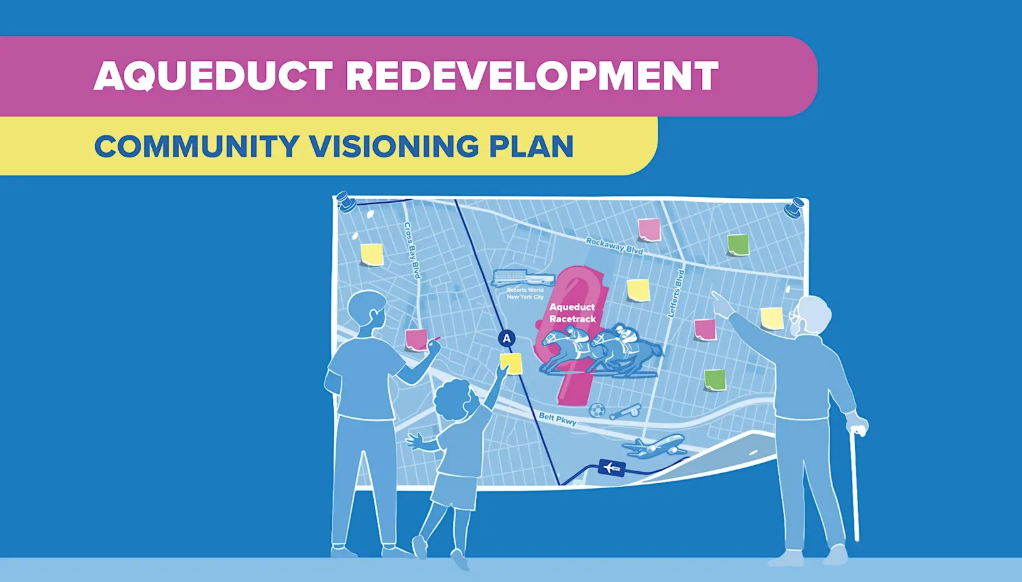
New York State has launched a community engagement and site planning process for the approximately 100-acre Aqueduct Racetrack site in South Ozone Park, Queens, kicking off a series of workshops that will help guide the future of one of the largest state-owned redevelopment opportunities in New York City.
The initiative, led by Empire State Development, will gather public input on priorities for the site, including housing, public open space, retail, and community facilities. Feedback from residents will directly inform the Aqueduct Community Master Plan, which is expected to be completed in early 2027.
Two community workshops are scheduled for the first phase of engagement. The first will be held in person on May 12 from 6:00 p.m. to 8:30 p.m. at John Adams High School. A virtual session will follow on May 14 from 6:30 p.m. to 8:30 p.m., providing additional opportunities for participation.
“As we work to address New York’s housing crisis and create more vibrant, inclusive communities, it is critical that we fully utilize state-owned land,” Governor Kathy Hochul said. “The Aqueduct site represents a significant opportunity, and through this community-driven process, we will ensure its future reflects the immediate priorities of Queens residents while expanding housing, economic opportunity and public amenities for all New Yorkers for years to come.”
The Aqueduct site, home to the historic racetrack facility, has long been identified by state officials as a major redevelopment opportunity due to its scale and location within southeastern Queens. The master planning process is expected to evaluate a range of redevelopment scenarios, balancing residential development with open space and neighborhood-serving amenities.
State officials said the engagement process is intended to ensure local residents, community organizations, and stakeholders play a central role in shaping the long-term vision for the site. Additional workshops and outreach efforts are expected to continue throughout the planning process.
Once completed, the master plan will establish a framework for future development decisions at the site, including potential housing construction and infrastructure improvements aimed at supporting broader community growth.