New York Construction Report staff writer
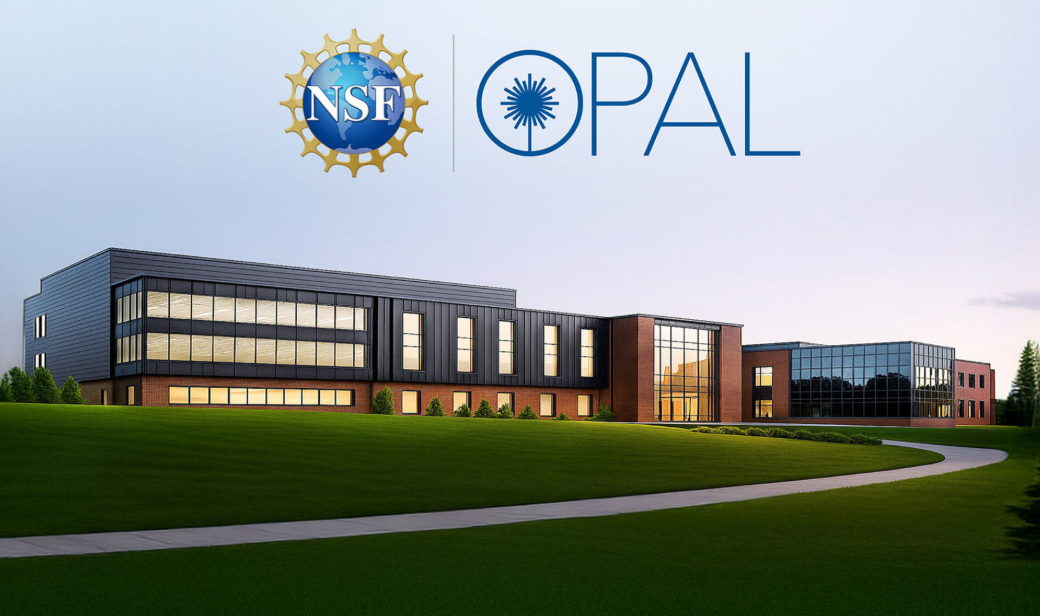
The University of Rochester has received the first round of National Science Foundation funding to advance the proposed NSF OPAL laser facility into its final design phase, bringing the project another step closer to construction.
Funding could total up to $13.7 million and will support completion of the design for the proposed two-beam, high-peak-power facility at the university’s Laboratory for Laser Energetics (LLE).
If built, NSF OPAL is intended to become the world’s most powerful laser system and operate as a shared research facility for scientists from around the world.
The facility is being designed to provide researchers with new capabilities to study open questions in quantum electrodynamics, recreate conditions similar to those in the early universe and produce what the university describes as the most powerful electron accelerator on Earth.
The project is also intended to strengthen U.S. leadership in ultrahigh-intensity laser research and develop technologies with potential applications in national security, fusion energy, semiconductor and industrial manufacturing and medicine.
About $18 million in NSF funding was announced in 2023 for the project’s initial design and technology development.
During the final design phase, the project team will work on technologies including high-energy amplifiers, large-aperture optical components and advanced diagnostic systems.
Artificial intelligence and machine learning will also be incorporated into experiment planning, facility operations and data analysis. The university says this approach would make NSF OPAL one of the first major scientific user facilities to incorporate AI and machine learning into its core design.
The project also includes efforts to develop technologies that could be used by future high-power laser facilities. The work is expected to involve U.S. industry and researchers in developing laser optics and experimental diagnostics.
One related effort is the University of Nevada, Reno-led DELIGHT program, which received a $4.5 million NSF grant in August 2026. The program is developing diagnostic systems for NSF OPAL and other petawatt-class laser facilities.
Workforce development is another component of the final design phase, with hands-on training planned for future laser facility designers, builders, operators and scientific users.
The project is expected to draw on the Rochester and Finger Lakes region’s existing lasers and optics industry and research community as technologies are developed and potentially commercialized.
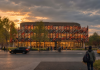
NSF OPAL would be constructed at the University of Rochester’s LLE if the project receives a future construction award. The facility is planned as a national shared resource, providing research capabilities to the broader scientific community and supporting collaboration among institutions.
“This level of advanced research requires an outstanding team,” University of Rochester President Sarah Mangelsdorf said in a statement.
The final design work involves five institutions: the University of Rochester, the University at Buffalo, the University of California, Irvine, the University of Notre Dame and Plymouth Grating Laboratory.