New York Construction Report staff writer
A joint venture between Camber Property Group and the Osborne Association has broken ground on a more than $167 million redevelopment of the long-vacant former Bayview Correctional Facility in Manhattan’s West Chelsea neighborhood.
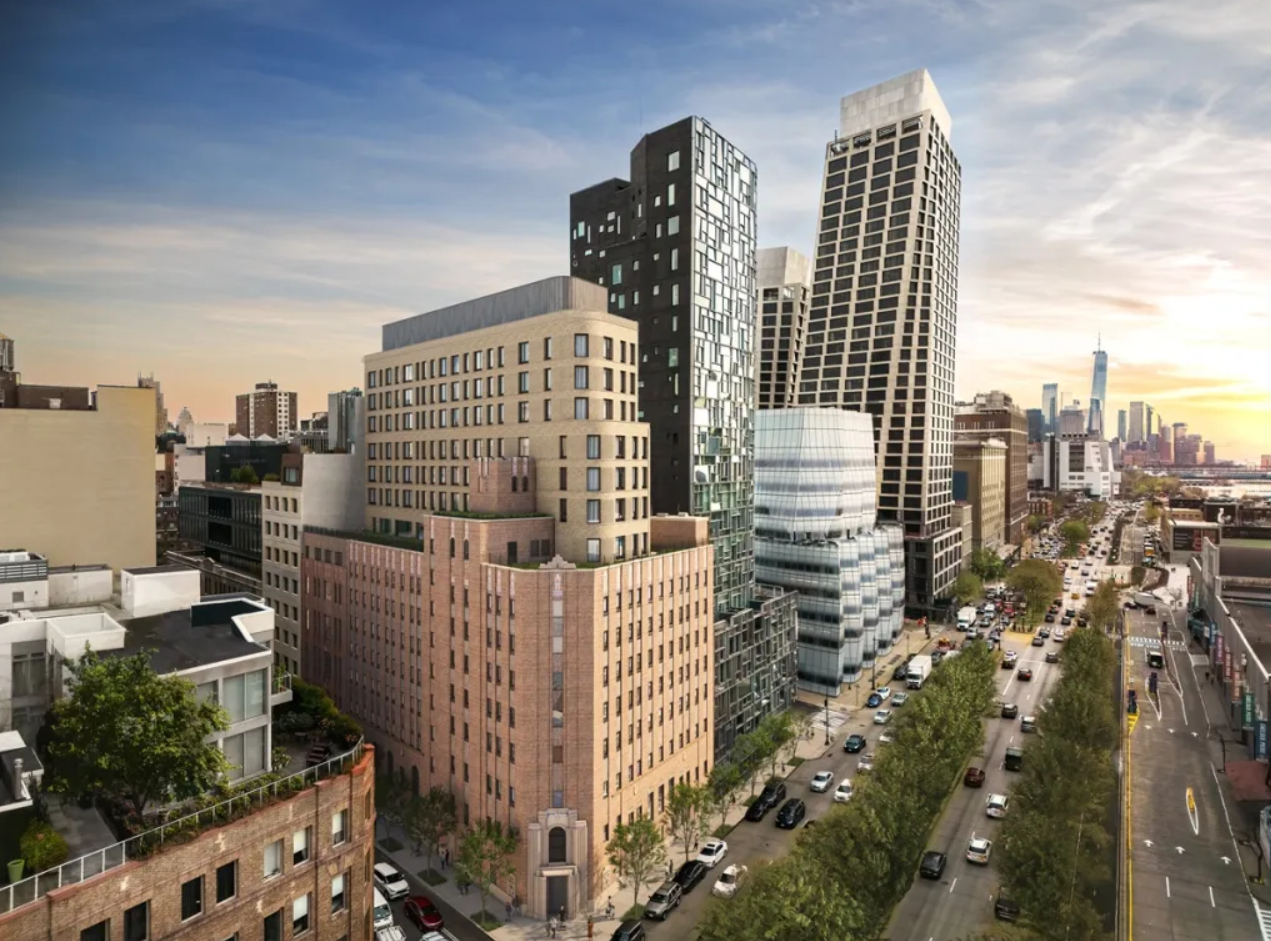
The Chelsea Beacon project at 550 West 20th St. will convert the state-owned, approximately 100,000-sq. ft. property into up to 131 permanently affordable housing units, a 15-unit short-term transitional residence and 9,300 square feet of community facility space.
Empire State Development supported the project by managing environmental review and project approvals and overseeing the property’s disposition for affordable housing and community uses.
“The groundbreaking of Chelsea Beacon marks an important step toward transforming a long-vacant State property into a lasting community asset,” Empire State Development President, CEO and Commissioner Hope Knight said. “By bringing together affordable housing, supportive services and community space while thoughtfully preserving this historic building, Chelsea Beacon demonstrates how strategic public investment and strong partnerships can unlock the potential of underutilized properties.”
The Art Deco building was constructed between 1930 and 1932 as the Seamen’s House YMCA and was designed by Shreve, Lamb and Harmon Architects. It later became the Bayview Correctional Facility, a women’s medium-security correctional and work-release facility.
The property closed after flooding from Hurricane Sandy in 2012 and has been vacant for more than a decade.
Empire State Development issued a request for proposals in September 2023 for the purchase and redevelopment of the property. Gov. Kathy Hochul announced the joint venture’s selection in July 2024.
The housing will serve households earning up to 80 per cent of the area median income. Seven apartments will be fully accessible for residents with mobility impairments, while three will be equipped for residents with hearing and visual impairments.
Construction is expected to be completed in 2029.
The project also will include a 15-unit short-term transitional residence for people with mental health needs who are navigating life transitions and require temporary housing.
The New York State Office of Mental Health is providing capital and operating funding for the residence. Urban Pathways was selected through a competitive request for proposals to operate the residence and provide on-site supportive services.
The redevelopment is designed to preserve and reuse significant portions of the historic property following community consultation and coordination with the State Historic Preservation Office.
The historic Main and Annex buildings will be preserved and adaptively reused, while a new addition will be constructed within the interior courtyard to increase the number of housing units.
The historic interior chapel will be restored and converted to program space. A tile mosaic from the former pool also will be preserved and reinstalled in the residential lobby.
The new addition will be set back from the street wall and use masonry materials intended to complement the existing facade.
The project will also include sustainability and resiliency measures, including all-electric building systems.
“This true public-private partnership was developed through close collaboration with partners at all levels,” Camber Property Group Principal Rick Gropper said. “We are thrilled to play a part in bringing this historic building back to life and look forward to creating the next chapter of this storied space for the local community.”